Everyone is selling AI. LMS vendors are no exception. The result: product pages crammed with “built-in AI”, “AI assistant”, “smart recommendations”, and L&D teams unable to tell what matters from the gimmicks.
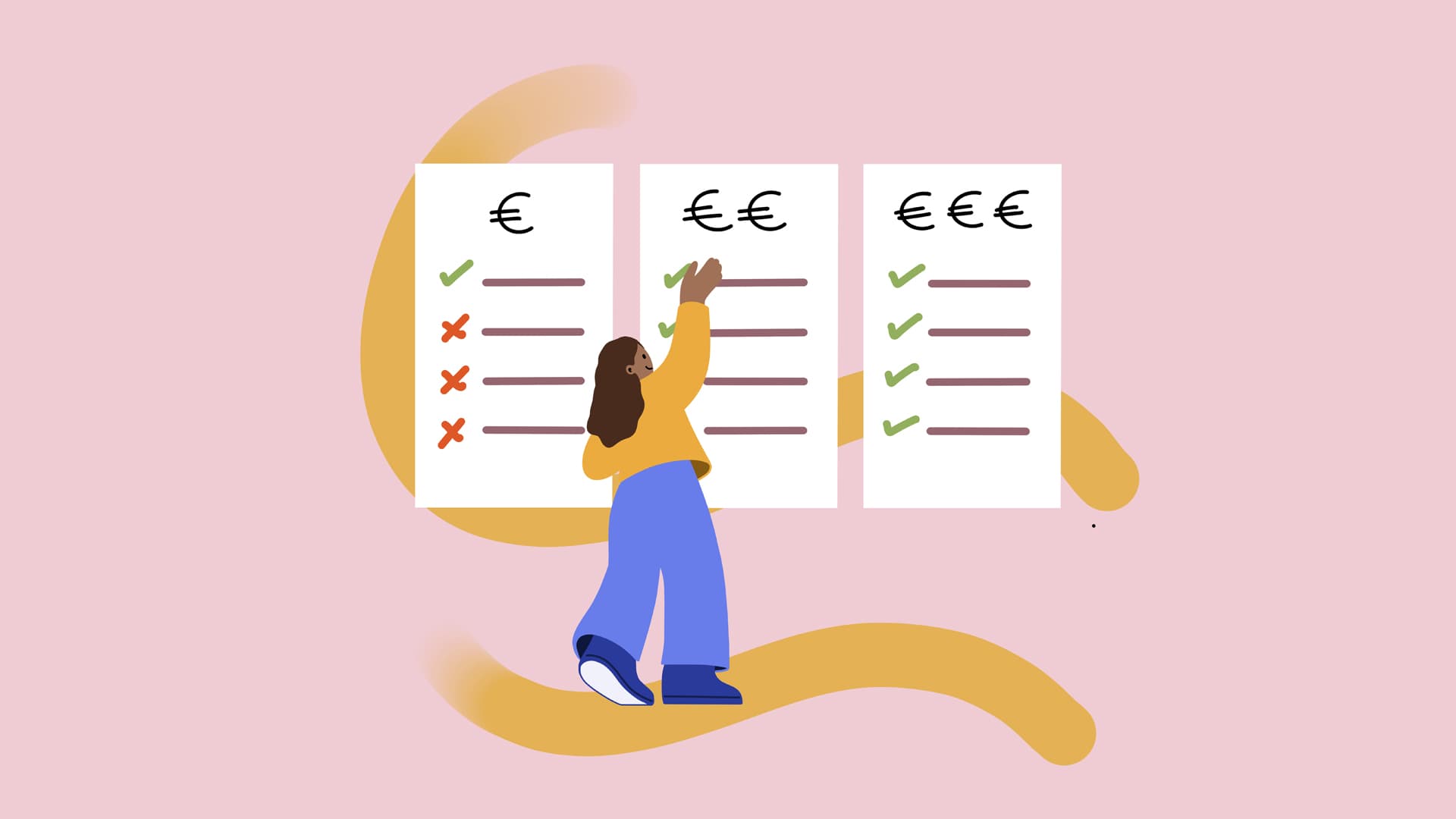
This guide gives you a clear grid. Not an exhaustive list of what's possible, but the AI features that genuinely move the needle for your teams, and the ones you can safely ignore.
What a modern LMS “with AI” should deliver in 2026
An AI-powered LMS is a training platform that natively embeds artificial intelligence into its core functions: content creation, learning path personalisation, learner assistance and performance monitoring.
The word “natively” is critical. An AI module bolted onto a generalist architecture does not deliver the same results as AI trained on your own operational use cases.
Why does it matter? Because 61% of frontline workers have no access to suitable mobile training (IFOP), and AI is the only way to produce, personalise and roll out content at the speed of the field.
The three questions to ask any LMS vendor:
- Is the AI trained on specific frontline use cases, or is it generalist?
- Can AI-generated content be reviewed and corrected by your in-house experts?
- Do the AI agents answer your teams' operational questions in real time?
The 7 AI features to demand from an LMS in 2026
Let's get to the point. These seven features have a direct impact on your results: completion rates, rollout speed, compliance, and field performance.
1. Job-specific content generation
Your LMS authoring tool should generate training capsules in minutes, not weeks. Genuinely job-specific AI cuts creation time by 4x (Beedeez). It understands your protocols, your products, your hands-on tasks.
What you should see: your field expert dictates, the AI structures, you validate. Not the other way round.
2. Operational Q&A AI agents
Your frontline teams have questions while on shift: about a protocol, a product, a procedure. A Q&A AI agent answers in real time, without bothering a manager, without breaking the flow of work.
Beedeez ships this kind of agent natively: AI agents built for the field, in action.
3. Conversational simulation
Training people on sales, customer reception or handling a difficult situation without simulation means training in a vacuum. A worthwhile AI-powered LMS offers guided role-play: your employee practises, the AI plays the customer or the manager, and gives immediate feedback.
Yes, it takes time to set up. That is the price of building real competence.
4. Learning path personalisation
Adaptive learning is not a tick-box option. It is your platform's ability to adapt content and progression to each employee's profile, results and context.
Personalising learning paths with AI matters because a new joiner in onboarding does not have the same needs as someone returning from a long absence.
5. Automatic translation and localisation
Rolling out across several countries or regions? Automatic translation of your content is essential. Not raw translation: a translation that respects your job-specific conventions and approved terminology. Beedeez covers 26 languages natively.
6. Contextual recommendation
AI should surface the right content at the right moment: after an observed mistake, ahead of a seasonal peak, following a process change. This is not marketing push. It is real-time skills steering.
7. Predictive tracking and alerts
A completion dashboard is a rear-view mirror. An AI-powered LMS tells you who is about to drop off before it is too late, and proposes a corrective action to the manager. At Picard, this kind of tracking helped deliver 92% employee engagement.
AI features that are nice-to-have (or worth qualifying)
Not everything is a priority. Here is what vendors sell as “AI” but which has only a marginal impact on your field results.
Generic chatbots. A chatbot that answers questions about how the platform works is UX onboarding, not training. Do not confuse it with a job-specific AI agent.
Automatic grading of written assessments. Useful for academic pathways. Of little relevance to frontline teams, whose assessments are situational.
“AI-driven” gamification. Gamification is an instructional design mechanic. AI does not change its fundamentals. Be wary of marketing claims on this point.
Image or video generation. A bonus for content production. Not a priority for completion rates or field performance.
To understand the real impact of AI on training: AI has a genuine effect on your L&D programme when it serves usage, not demos.
Summary table: demand it or qualify it?
| AI feature | Field impact | Priority | Check before you buy |
|---|---|---|---|
| Job-specific content generation | Very high | Demand | Demo on your own use case |
| Operational Q&A AI agents | Very high | Demand | Response time and job-specific accuracy |
| Conversational simulation | High | Demand | Configurable scenarios |
| Learning path personalisation | High | Demand | Algorithm or business rules? |
| Translation and localisation | High (if multi-country) | Demand if relevant | Quality on job-specific terms |
| Contextual recommendation | Medium-high | Demand | Automatic or manual trigger? |
| Predictive tracking | High | Demand | Built-in manager alerts? |
| Generic chatbot | Low | Nice-to-have | Do not confuse with a job-specific agent |
| Automatic text grading | Low (field) | Nice-to-have | Mainly relevant in academic settings |
| “AI” gamification | Variable | Nice-to-have | Check the reality of the AI contribution |
What an LMS's AI does not replace
An honest sorting grid has to cut both ways. Three areas resist automation, and a vendor claiming otherwise should worry you rather than reassure you.
- Subject-matter validation. Content generated from your documents is a first draft, not operational truth. On a safety procedure or a technical gesture, review by an internal expert is not a precaution, it is a requirement.
- Regulatory updates. A model does not know a text changed last month. Monitoring stays human, and it is what triggers the content update, never the other way round.
- Learning the gesture at the workstation. No AI replaces a peer demonstrating on site. It prepares, it reminds, it checks understanding. It does not make someone acquire a gesture.
Practical corollary: the right question in a demo is not "what can your AI do", but "what does it not do, and how does your tool organise human validation". A vendor unable to answer the second question has not thought about real use.
The deciding criterion: does the AI truly serve the field?
This is the real question. Not “do you have AI?”, but “is your AI useful to a shop-floor salesperson, a technician on a job, a warehouse operative between two tasks?”
A field-first LMS embeds AI into the real flow of work, not into an admin interface designed for HR teams. Beedeez's operational AI is built to answer a job-specific question in 30 seconds, not in five clicks.
The difference shows up in the numbers: Beedeez reaches 156 capsules completed per employee per year, against a handful of scattered modules on a generalist platform.
Native AI or bolt-on AI: how to check before you buy
Two simple moves to separate substance from marketing:
Ask for a demo on your own use case. Not on a generic one. “Can you generate a capsule on our warehouse goods-receipt procedure?” If the AI cannot do that without significant prior training, it is generalist AI.
Ask where the AI is trained. On public data? On your existing content? On your internal processes? The answer tells you whether the AI truly understands your business or merely simulates it.
A comparison of LMS platforms with built-in AI and the essential features of an LMS are two complementary resources to refine your evaluation grid.
Beedeez, the LMS built for frontline teams, systematically runs these demos on real cases. Rollout in days, HRIS integrations (SAP, Workday, TalentSoft), a dedicated CSM from the very first module.
How to check it in a demo
A sales demo is designed to succeed. For it to teach you anything, you have to take it off script. Here is the sequence to impose. It takes about fifteen minutes and eliminates efficiently.
- Bring your own document. An internal procedure, a product sheet, a work instruction, with your industry vocabulary and your abbreviations. Ask for a short sequence to be generated from it, live.
- Watch the vocabulary, not the layout. Bolt-on AI produces well-presented but generic content that rephrases without understanding. AI trained on business cases keeps your terms and uses them correctly.
- Time it. From importing the document to a usable sequence, count in minutes. Beyond a quarter of an hour for simple content, the tool will not sustain regular production.
- Ask the agent an operational question, phrased the way a frontline employee would, approximations included. How it handles a badly phrased question tells you more than how it handles a perfect one.
- Ask to see the learner interface on a smartphone, not on a computer screen, and under degraded network conditions if that is your reality.
- Ask where AI sits in the journey. If it is only reachable from the admin console, it serves the administrator, not the learner.
These criteria belong in your request for proposal. We published the full template of an LMS requirements document for frontline teams, with the weighted scoring grid and the scenarios to have demonstrated.
Over to you. You now have a working grid to assess any LMS on its real AI capabilities: the seven features to demand, the nice-to-haves to qualify, and the questions to ask in a demo. The rest comes down to your field context: yours.
Book a Beedeez demo and put these AI features to the test in real field conditions.
Frequently asked questions
What is the difference between an LMS with AI and a traditional LMS?
An LMS with AI natively embeds content generation, personalisation and real-time assistance, whereas a traditional LMS merely hosts and delivers modules. In concrete terms: with an AI-powered LMS, a designer builds content 4x faster and your frontline teams gain a job-specific assistant available at any time.
Can AI really create job-specific training content with no human input?
Not entirely, and that is by design. The AI generates, the expert validates. With Beedeez, a field expert can build a structured capsule in 30 minutes where it used to take three days with an outside provider. The human stays the guarantor of job-specific quality.
How can you check that an LMS uses genuinely “job-specific” AI?
Ask for a demo on your own use case, not a generic example. If the AI produces relevant content on your internal procedures without lengthy prior training, it is probably trained on solid sector-specific data. Otherwise, it is dressed-up generalist AI.
Does the AI's predictive tracking replace the manager?
No, it frees them up. Predictive tracking flags to the manager who is at risk of dropping off, before it is too late, without the manager having to dig through dashboards. It is a steering tool, not a substitute for the human relationship.
Which HRIS integrations are essential for an AI-powered LMS in 2026?
Integrations with SAP SuccessFactors, Workday and TalentSoft are the minimum standard for automatic synchronisation of users and skills data. Without them, you run two parallel systems of record, a source of errors and administrative load.
How do you tell native AI from bolt-on AI?
Three signs give it away. Industry vocabulary: bolt-on AI rephrases neatly but loses your terms. Generation time: native integration produces a usable sequence in minutes. Placement in the interface: AI confined to the admin console serves the person running the platform, not the person learning.
The decisive test remains a demo on your own document, never on a textbook case prepared by the vendor.
Which AI features actually help employees without a fixed workstation?
Four, in this order. Generating short formats from your existing documents, because available time is counted in minutes. Agents that answer a procedural question in context, replacing the call to a manager. Automatic translation, when teams do not share a language. Predictive tracking, to spot a team dropping off before completion rates show it.
Everything else, however impressive in a demo, is secondary for this population. That is the design principle behind Beedeez, the LMS built for frontline teams.