Last night I watched the movie “I am a legend.”
It's that movie with Will Smith where the world is affected by an incurable virus that zombifies the population.
Will Smith barricades himself in his house with his dog to avoid being infected.
Frankly, if you haven't seen it, go for it. It is really incredible.
This movie especially made me think of an HR concept that is quite unknown in France: the zombification of employees.
So, nothing to do with falling arms or putrid breath: we speak more of “undead” employees. You get the impression that they are there, that they are healthy and that everything is fine, but no.
Ready to take a trip to Zombieland? Follow me!
Undead on your premises?
After a lot of research, I realized that there were several terms to refer to these employees:”Working Dead” (that one actually makes me laugh) or “zombie employees.”
Call what you want, but they've been there for quite some time now.
The term “zombie employees” is quite old: it appeared after our dear industrial revolution, around the 19th century. Before that, most workers were entrepreneurs: butchers, farmers, bakers, etc.
Then factories appeared and Mr. Ford with it. The aim was to produce a lot, on the line, in a short time. Workers therefore had to know processes by heart, and repeat them over and over again.
Moreover, they were trained in this sense: to learn by heart at school and to spit everything out at the time of the exam. And then usually forget in the process. Employers did not need more.
Zombification was on.
But what is the relationship with today and with our businesses? Most of us no longer work on a production line, but on a computer!
Yes, but unfortunately not much has really changed.
How to recognize a zombified employee?
The zombified employee can easily be detected. Here are a few things that should alert you:
- He is no longer trying to integrate socially
- He works out of necessity, he does what he does because he has to do it, not because he likes it
- It no longer offers anything innovative or creative, it does not go off the beaten track
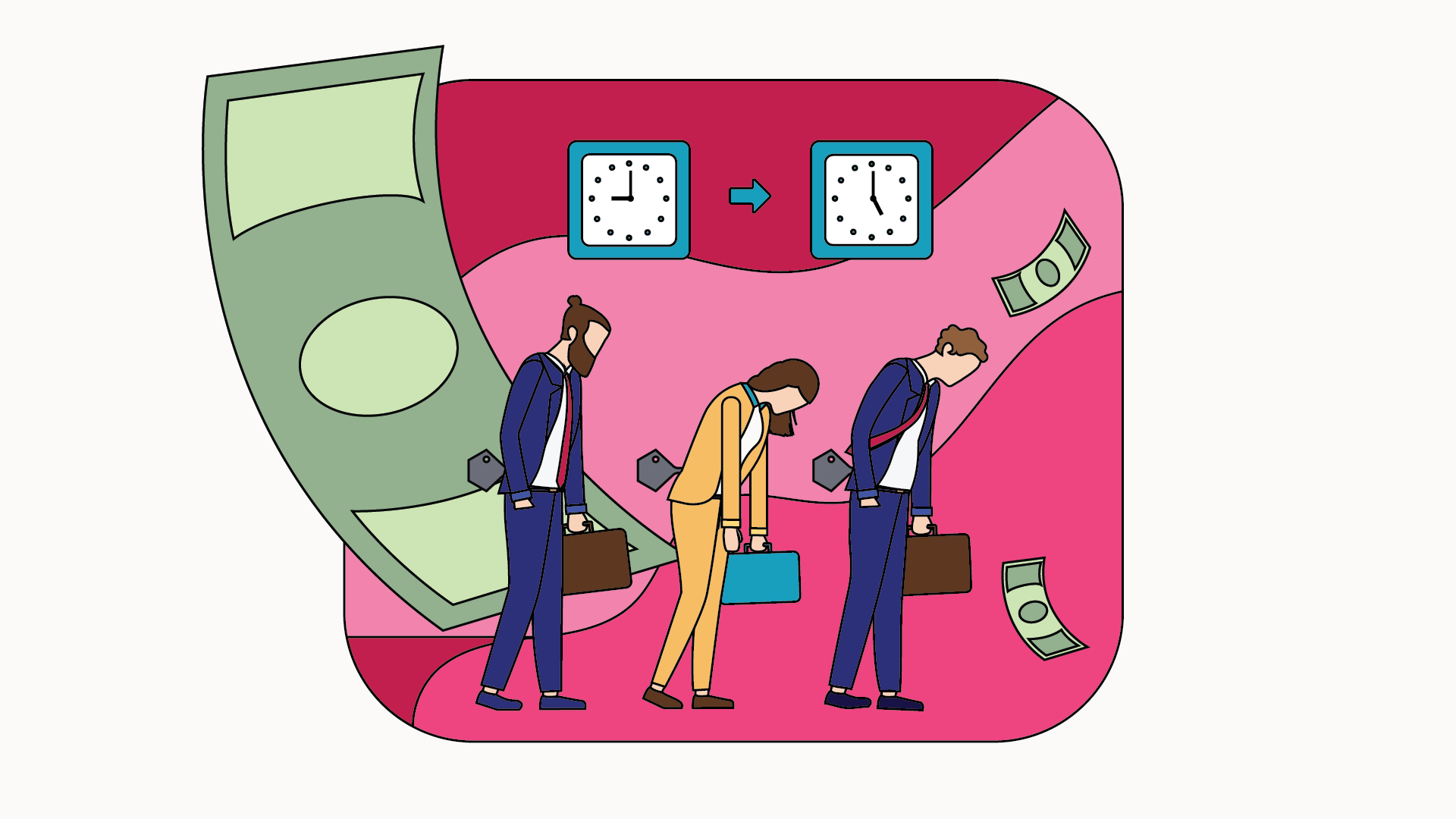
- He often arrives at 9:00am and leaves at 5:00pm (this point should be taken with a grain of salt: some employees have this behavior, but are very efficient)
- He does not give his opinion because he has the impression that he is not expected.
In short, a zombified employee is an employee who has lost his soul a bit. He no longer works for himself, but for the company.
So, he wakes up like a robot on Monday morning, goes on his week without asking too many questions, and goes to bed on Friday happy that the weekend has finally arrived. A bit sad, isn't it?
And the worst thing is that this syndrome is contagious. A working dead can sometimes demotivate the employees around them. Through his lack of motivation and enthusiasm, he will create a dreary and demotivating work environment.
So you might as well defuse that as soon as possible!
Welcome to Zombie University
But before giving you the solution to this problem, I wanted to reassure you on one point: these zombie employees are not necessarily there because of you. Zombification sometimes starts as early as college.
Let me explain myself.
In his book “The Future of Work,” Jacob Morgan, the co-founder of Chess Media Group, says that zombification starts when students fund their studies. He is in debt over several decades, and has no choice but to choose a job that will allow him to repay his debts in full.
The meaning of his work then takes a back seat. Financial motivation, on the other hand, is becoming a priority. The student is then ready to accept any job, and is much less concerned about the missions he will perform or the values of the company.
And so, before even joining his first CDI, he's already zombified.
I told you it wasn't necessarily your fault!
Presenteeism, this scourge
The second undeniable cause of this mass zombification is these famous fixed schedules. I've given you a short list of phrases that we would all like to banish, throw away, and bury in a hole in 2022:
- “Good afternoon Michel!” launched at 17:45 through the open space by a slightly heavy colleague, does that mean anything to you?
- “No, you have to stay until 6 p.m., you are an executive, you have to lead by example.” Spoken by an old-school manager
- “Yes you're coming early Catherine, but I can't see that. On the other hand, when you leave at 4 pm, I can see it!” let go awkwardly by a superior who doesn't understand much about management.
More seriously, the ancestral tradition of fixed schedules also dates back to the Ford era (we're starting to hate that one). At the time, you had to know how long the workers worked on this or that task in order to accurately calculate their productivity. So they were badging and getting paid more if they worked longer hours, because that meant they produced more.
But is that still the case today? In more strategic and creative positions, staying in the office longer does not necessarily mean thinking about more strategies or having more creative ideas.
So it's demotivating.
And demotivation = zombification (yes, you're starting to get the hang of it!)
The anti-zombie remedy
(Very) good news: zombification is not inevitable. You can already put in place certain measures to avoid it, or stop it.
We have just seen together what can produce this “zombie” state: fixed schedules, little autonomy, boring tasks...
I would even add: no perspective of evolution and lack of confidence on the part of superiors and the company in relation to the employee. That's a lot!
But normally, solutions should already come to your mind after you have enunciated these elements. I'm going to help you a bit and give you a non-exhaustive list:
- Train them : a trained employee is an employee who has prospects for development in the company. He doesn't feel left out, and that's super stimulating.
- Make them autonomous : trust them and give them tasks with a clear objective. Leave your employee autonomous from A to Z, until delivery. This will prove to the employee that you trust him with the operational implementation and that you only control the result.
- Be flexible : if your employees can work when they want and where they want, they will know how to create their work environment and schedule according to their needs. If leaving total time flexibility is disturbing for your business, set schedule “ranges”: between 6 am and 11 am in the morning, and between 3 pm and 10 pm in the evening for example.
- Incorporate a bit of creativity : so yes, not everyone is creative by nature. But I am convinced that creativity can be learned and encouraged. Let your employees express themselves and give them the opportunity to create things.
- Give meaning : explain why the missions of your teams are important for the company. You can even go further: show the impact of their actions on the business sector or on the outside world. Doing something that makes sense is the 100% anti-zombie antidote!
*radio sound* Agent 2034, mission successful. Planet Earth... um... your business no longer has zombies among its ranks. Congratulations!