
.svg)


Our platform combines educational excellence with

What you can do with Beedeez

Democratize the creation of training content

.svg)
Capture knowledge
directly in the field


Boost your strategy with an AI that truly understands your challenges

Deploy your remote and face-to-face strategies without compromising either one
There's LMS... and LMS. The one in the field makes all the difference
And it speaks the language of your teams.
We'll let you compare.
- Creation time
- Access and use
- Contributors
- Learning mode
- Sharing field knowledge
- Update pace
- Indicators monitored
Traditional LMS
Completion
Traditional LMS
Completion
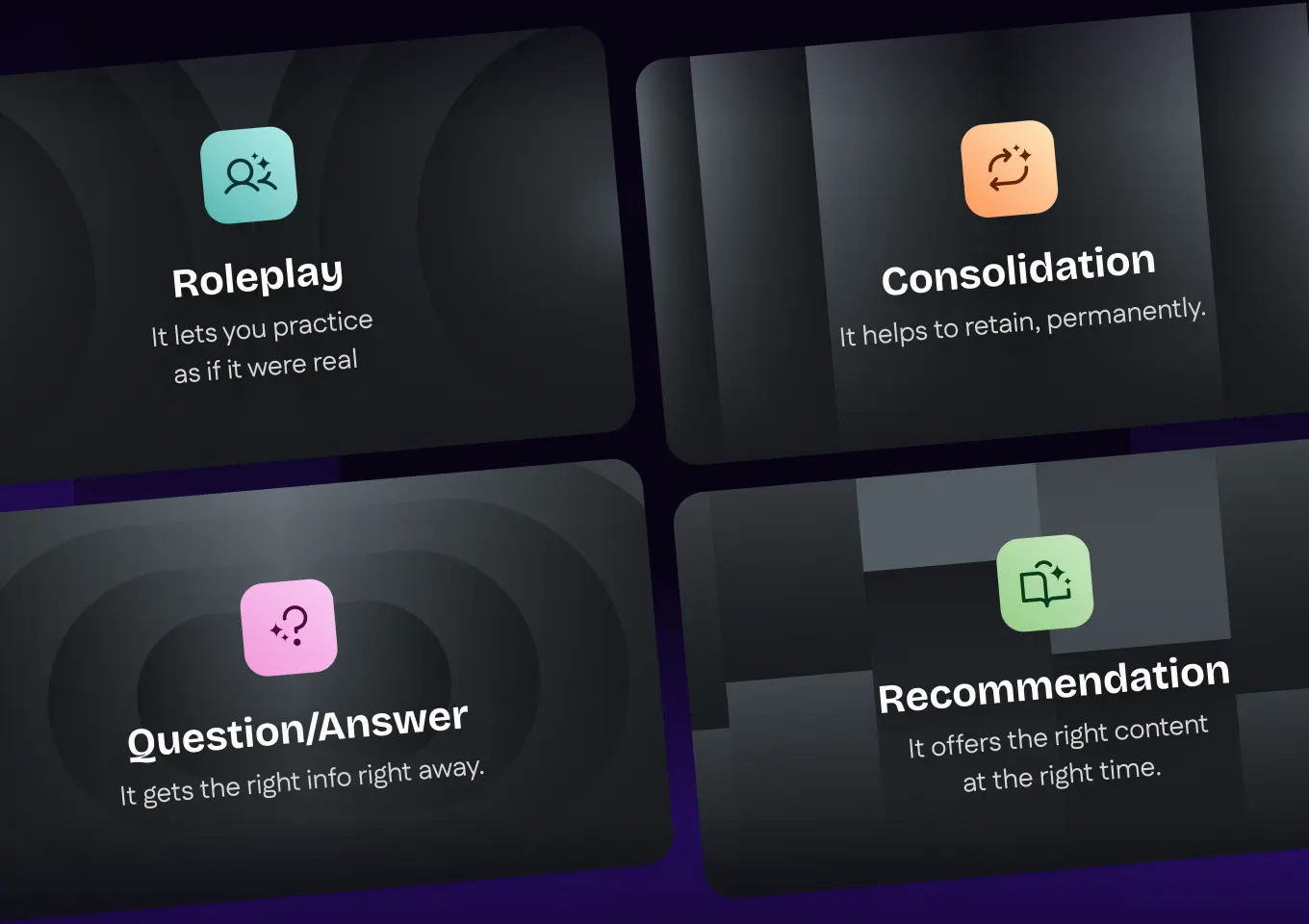
Les Agents IA Beedeez
Quatre Agents.
Formés à vos métiers. Vos process. Vos imprévus.
Ensemble, ils font ce que toute IA devrait faire :
accompagner l’humain.
Beedeez connects easily with your existing tools
Our platform is interoperable, fluid, and secure. It integrates with your existing tools.


Behind Beedeez, a story of conviction in the field
What drives usYour realities terrain, we know them
And we have what it takes to answer it, sector by sector.


Learn about their experience with Beedeez


Frequently asked questions
What is the typical time frame for deploying the Beedeez platform?
Our proven methodology enables complete deployment in just 4 to 6 weeks. This includes initial setup, integration with your existing systems, administrator training, and launch support. You can create and deploy the first courses as early as the second week.
How does Beedeez adapt to organizations of different sizes?
Our platform is designed to grow with your needs, whether you have a few dozen or several thousand users. Its multi-department architecture allows you to manage both centralized structures and complex organizations with numerous subsidiaries or points of sale, each with their own specificities.
What security measures are in place to protect our data?
Beedeez adheres to the highest security standards, offering secure hosting in Europe, GDPR compliance, sensitive data encryption, and regular security audits. Our SSO integration protocols ensure the secure management of user access.
How do you assess the Beedeez platform ROI?
We work with you to define performance indicators that align with your business objectives, such as reducing logistics costs, increasing completion rates, improving field performance, and saving time by training teams. Our dashboards allow you to monitor your data in real time and generate automated reports for management.
What level of support do you offer after deployment?
In addition to providing technical assistance, we support you in the long term by assigning you a dedicated Customer Success Manager. This manager will help you optimize your use of the platform, train your new administrators, and advise you on best practices. Regular webinars and a user community allow you to connect with other training professionals.
Turn your training into a competitive advantage
Talk to a Beedeez expert and discover how to bring your training strategy to life.